even with nougat, you can have a perfect moment

I'm sentimental, if you know what I mean, I love the country but I can't stand the scene. And I'm neither left or right, I'm just staying home tonight - getting lost in that hopeless little screen.

The First Last Kiss

The First Last Kiss - Ali Harris Genuinely one of the worst-written, worst-edited books I have ever had the misfortune to attempt to read. Felt like it was about a thousand pages long. It takes a lot to make me give up on a book, especially something as fluffy as this, but holy mother of god, this just tested my patience too far. Special shout out for some of the clunkiest, most-wooden dialogue ever committed to paper.

We Were Liars

We Were Liars - E. Lockhart Just finished this. Initial impressions below! These are very, very spoilery btw.


- What happened is telegraphed pretty early on. While the exact details aren’t clear, I found it really easy to get the general gist of what was going on.

- The writing is like a mashup of Lockhart’s Ruby Oliver books (which are my favourite forever) and the things I liked about The Disreputable History of Frankie Landau-Banks (which is otherwise easily my least favourite book of hers - I pretty much loathe it). It occasionally has the humour of the RO books and it has the wordplay that I liked in FLB.

- Really, the writing is just amazing.

- I liked Cady’s characterisation. I definitely felt like I got the sense of who she was.

- However, I felt like the other characterisation was probably a bit flat. As is often the case in E. Lockhart books (even Ruby Oliver), the parents in this one are pretty terrible people but the narrative implies that you ought to feel sympathy with them which I just don’t. I’m sorry, but these are literally awful people and if the point was supposed to be "they fuck you up, your mum and dad" it certainly doesn’t come across that way. So much of the blame for the behaviour (not just in this book but in all of her books) feels like it is taken away from the parents and laid on the children.

- I liked Gat, but I don’t really understand what the whole allegory to Heathcliff was all about. I mean, I understand because of the patriarch of the family’s reaction to his race that he is an “outsider” in the same way that Heathcliff was, but what I don’t get is the part where Gat outright says that Harris is right about him, that he is Heathcliff. That sort of implied that he had the dark side in the way that Heathcliff had, but this is never shown. This made me think that somehow he was going to be primarily responsible for what happened, but he wasn’t. In fact, his presence really lessens in the latter half of the book, and while I get how that works thematically with other things in the book, it really does not work with the parallel with WH.

- I don’t think it was realistic that Cady never mentioned that she’d been seeing the other Liars to anyone. I get that she doesn’t get on with her mum and shuts her out, but you’d think it would have come up?

- I kind of hated the implication that her mum had any redeeming qualities at all, because they certainly weren’t represented in the book. She came across as a completely horrendous human being, as did her sisters (with the possible exception of the exceptionally spineless Carrie).

- I also don’t like that the suffering of the three sisters and the grandfather is so black and white and doesn’t even seem to change them, much. In this way, it reminded me of Before I Fall. It’s hard to explain what I mean, but I’ll try. The three sisters behaved in a horrible, grasping manner. So they each lose their eldest child (and Gat, who I’ll come on to again in a minute). It’s such a biblical level punishment that all it does is make them feel sorrier for themselves. Now, of course it’s a terrible thing to happen to someone. I’m not arguing that it isn’t. But it’s too terrible. It’s too dramatic. Because it’s almost impossible to feel sorry for the sisters, but you also can’t say they got their just desserts. So it just leaves you with a bit of a nasty, empty taste in your mouth.

- Finally, what is the story of Gat supposed to teach us? I don’t get that either. What about Gat’s family (his real family)? What about Gat’s friends? This could have been a really interesting exploration of privilege but all the avenues it could have gone down were closed by the premise.

I liked this book. A lot. But like a lot of Lockhart’s other work, it’s far more about the concept than the characters (outside of the main character). The Ruby Oliver books are the only books where I felt I got a true idea of the other characters outside of the narrator - I could see who they were despite Ruby seeing them from her perspective. However, each individual book Lockhart has written since then has had an interesting premise, flawless prose, a great main character (with the exception of FLB, whom I would gladly kick in the shins) and then no depth whatsoever. This is definitely the best of the rest, and I read within about two hours this afternoon, so it’s definitely one that would keep you going, but I feel like it was missing something to really bite into.

Honestly? My biggest problem with the whole thing is that I think she made the safe choice with the narrative. My assumption from the cover and what was a certainty within about ten pages was a “dead-all-along” scenario. But my feeling is that it is braver to have the characters live to overcome the awfulness of their parents than to kill them, to deal with the prejudices and problems at hand, than to erase their existence. I don’t know. Definitely a good book, probably a very good one. But I find myself wanting more than just a plot twist.

I give We Were Liars seven out of ten.
Judith Kerr's Creatures

Judith Kerr's Creatures - Judith Kerr Magnificent. Simply magnificent.

Behind the Scenes at the Museum

Behind the Scenes at the Museum - Kate Atkinson In the end, it is my belief, words are the only things that can construct a world that makes sense.

If this is what Kate Atkinson's first novel is like, I am incredibly excited to explore the rest of her works. Seriously, how can someone writing their first book be this good? No, the novel isn't perfect, but it's astonishingly well crafted for someone who is apparently a novice. Atkinson creates a fascinating main character in this book, a weird, wonderful protagonist, then nests her in the stories of the other women that led to her being her, that led to her being now. There are several wonderfully crafted women here, and I'm only somewhat disappointed that I didn't get to spend more time with some of them, particularly her early relatives. I'd rather not spend much time with her mum though. The story also contains a mystery of sorts, though it's reasonably easy to guess if you think about it for long enough.

I have maybe two minor nitpicks about the story. The first is the “twist”. Like many others have said, while I found the twist easy enough to guess, the whole situation is pretty implausible. While I can just about buy Ruby having blocked out her sister's existence due to PTSD or whatever, I can't really buy the whole attitude of the family where they just never speak about her again and manage never to reveal to Ruby until fairly late in the game that she ever had a sister.

My second problem was that the end of the story seemed a tad rushed. There's all sorts of stuff that happens in Ruby's life that I'd liked to have seen more of, and I think this is that rare novel that could actually do with a few more pages, rather than a few less.

Anyway, brilliant stuff. I own Life After Life and I'll definitely be giving it a read soon based on this. I give Behind the Scenes at the Museum nine out of ten.

The Lightning Thief

The Lightning Thief  - Rick Riordan Read this because of my inextricable attraction to Greek mythology. Much better than I expected and passed the time waiting for appointments with my GP!

***

Nothing like watching your relatives fight, I always say.

I have an inexplicable obsession with Greek mythology. My parents gave me a picture book with a number of retellings of the myths (without the naughty bits, of course) when I was a kid which definitely started the whole thing, but I can't explain the persistence of this, and not, for example, my love affair with Dragonball Z. However, here we are.

This modern day tale, loosely based on various aspects of Greek mythology, casts a dyslexic kid with ADHD in the role of Perseus, and sends him off on his merry adventuring way. Percy is a reasonably likeable kid, though I would absolutely have hated him had I been his contemporary at school. If there's one flaw, it's that his voice is very young in these books, and, I would say, inconsistent with his age in many parts of the book. It's made clear that Percy grows up a lot over the course of the novel, and that he has a lot to deal with at home, which he seems to have a reasonably deep understanding of even at the start of the novel – his understanding of the dynamics of his mum's relationship for example. As such, I found it somewhat baffling that he so often sounds so utterly juvenile. Fair enough at the start of the book, where Riordan's trying to showcase “wild-child” personality, but I felt like by the end of the book the character had outgrown the box that the author was trying to squash him into with the dialogue he was giving him.

I liked all the little twists on the Greek stories that occur throughout the book. Some of them are obviously a bit shoehorned in, but I found it still worked quite well. Also, I'm a sucker for stories that involve boarding school/camp type things. I don't know if it's my inner only child that somehow thinks it would be great to be around peers all the time (and also recoils from any such suggestion!) but there's something fascinating about scenarios where children and young adults break away from their families at such a young age.

This is a really good book for children who are less likely to read, I think, and it definitely feels like a boy book, which is outside my usual reading. For all it's flaws – it is rather simplistic and clunky – I think I'll be reading the next one. Also, I think it's a pretty good introduction to Greek mythology – and indeed the concept of mythology – for the very young. I give The Lightning Thief six and a half out of ten.

How to Save a Life

How to Save a Life - Sara Zarr It's a jagged thing in my throat, how much I miss her.

This is a sweet, wistful little book, that is completely implausible in concept, but rather deftly written. The basic plot is that Jill's mum takes in a young girl who is pregnant as she (the mum) is going to adopt the baby when it is born, at which point the girl is free to get on with her life. It is pretty much obvious from the beginning that Jill's mum is going to end up adopting the teenager and have them all live together like one big extremely weird happy family.

I felt like everyone was drawn in a bit of a caricature. Jill is officially Not Coping with her dad's death, Mandy (pregnant chick) is super naïve and annoying, Jill's boyfriend is clearly getting less into their relationship, and Jill is clearly falling in love with this other dude. It's all pretty much set out at the start and everyone's issues are resolved in the ways that you would expect in your standard young adult plot. Everyone apart from Mandy is very nice and middle class and utterly respectable.

So why did I enjoy this? I don't know. Having lost my dad at a relatively young age, I'm always interested to find narratives that deal with this kind of sudden death in a realistic setting. I feel that this book did a reasonably competent job of it, though it stuck pretty rigidly to that idea that those grieving will find it difficult to let others in – until it all comes pouring out in one burst, and things start to get better, and that there is a pressure to “hold it together”. This can be true, and often is, and I certainly relate to some of it, but I feel like all too often grief is treated as a monolith, as a fixed object that reduces over time. Instead, it's mostly chaotic, or it was for me. I was largely fine, if extremely teary, after the event. It's only the months and years afterwards that give rise to what grief is, I believe for the majority of people – a shapeshifting monster of a thing that reappears when you least expect it and colours your entire perspective. I'm still grieving, now. My grief was and is anger and pain and misery and depression and anxiety – it was all of these things, differently, sometimes separately and sometimes simultaneously. It was and is not always visible and it doesn't manifest in the ways you would expect. All of this is okay. The number one thing you can expect on the death of a parent is that you are probably not going to be okay. As time goes on, what that means will change and dissipate, but the fundamental thing is that it cannot be undone and the grief does not leave. It just changes with you.

Anyway, to get back to the original point, I feel like this area is touched upon, but for the most part, Jill's grief is a bit of a monolith and I couldn't really engage with it. In the same way, Mandy's nasty background was a bit of a crayon drawing of a nasty background and she is the obvious result of it. The depth was somewhat missing. However, the writing was pretty exemplary, and I feel that's what really holds this story together. It's not reinventing the wheel – not even the YA wheel – but Zarr certainly knows how to put a sentence together and have you grasp the full meaning of it. It's not the just the words she does use, but the words that she pointedly doesn't use, that impress the nature of the characters on to you. And that's no mean feat. I'd definitely read something else by this author despite my slight misgivings about this book. I give How to Save a Life seven out of ten.

11.22.63

11.22.63 - Stephen King Sometimes a cigar is just a smoke and a story's just a story

And what a story this is. I'm not sure where Stephen King came up with the idea for this book, but it's a hell of a thing. Part time travel, part thriller, part love story. I enjoyed the slow build up, the reveal of how the time travel takes place, and the various peaks and troughs that take the main character to where he needs to be on that fateful day – this book is certainly worth a read.

The main character is your typical Stephen King main character, as sort of everyman searching for something in his life. He's given the opportunity to go back in time and for some reason he and his co-conspirator decide the best use of this opportunity is to prevent the Kennedy assassination. Which seems somewhat simplistic to me, at best. I know this kind of plays out, in terms of the fact that it doesn't really improve anything in the future, but I'm just not certain where the fixation on that particular moment stems from in the first place. I don't get the sense of why they both believe it possible that preventing it would make everything better? However, I have to also accept that 1. I am not American, and 2. I was born 27 years after the Kennedy assassination. So perhaps the impact and magnitude of the event – which I know and feel to be great – is even in excess of that which I can imagine.

I enjoyed a lot of the dallying around that happens prior to get into the meat of the story. As is, I suspect, somewhat common with Stephen King books – though I don't have the grounding to back this up – there is a lot of filler in these 740 pages. For example, the two iterations of the murder of the Dunning father could have been done a lot more effectively. The part of the book with Epping as a high school teacher felt comparatively short, and I was enjoying that part so much that I really wanted to spend more time there. I found the parts where he was trailing Oswald intriguing at first, but they quickly became tiresome. They were repetitive and didn't really add much to the depth of Oswald as a “character”. The whole point from the beginning was that he was a repulsive piece of work, and the only question is whether he was a repulsive piece of work with the balls to do what he was accused of doing. So it's kind of tiresome to spend so much time proving over and over how odious his behaviour is when we already know that. Also, regarding the romance Epping is painted as not being totally convinced at the beginning that stopping the Kennedy murder will fix things. Given the apparent strength of his love for Sadie, I kind of felt like it was unrealistic for him to pursue Oswald with the zeal that he did, sacrificing the possibility of continuing their love. I don't know, I just feel more like he would have stayed with Sadie. It was a sweet love story though.

Overall, I really did enjoy this a lot. I just feel like maybe if it had been about 200 pages shorter, it would have been more special. I give 11/22/63 eight out of ten.

Lord of the Flies

Lord of the Flies - William Golding Maybe there is a beast… maybe it's only us

Yeah, that quote just about sums up the subtlety of this book for me. I mean, not that lack of subtlety is a prerequisite for enjoyment, but I just didn't get out of this book what I might have done had it been a formative experience for me. I read this book this year, at the age of 23, instead of at school, where pretty much everyone else read it. Sometimes you can get over it, sometimes you can't. Sometimes you're better off just watching The Simpsons episode that covers the same ground. This is one of those times.

Everyone knows the plot, so I don't think there's any point in regurgitating it. I think my first problem with it is that I fundamentally disagree with Golding about the moral message that he's sending with this book, though I can see why it might have been useful tool at the time – I just think there are caveats to the idea that anyone has brutality inside of them, especially when a certain group mentality sets in. But I think the other failing of the story is that, for me, this central idea is all there is to the book. I didn't particularly enjoy the prose – I found it stilted and sterile. I didn't particularly enjoy the story, perhaps because I knew where it was going, or perhaps because I felt that I saw so little inside the heads of the people involved, except by way of the few incidents that make up the book. I just didn't particularly like anything about the story or feel anything when I read it. Big things, disgusting and terrifying things happened in this story, and I just sort of shrugged and still felt like all it was was a story, a tale of morality (or lack thereof) and not something that swept me away.

Again, this is all strictly personal and I can see why it is so widely read and why people encourage its reading. I can't decide whether its distinct lack of any sort of female presence had something to do with my inability to relate to the story. I think maybe not, but it's probably something to consider. I didn't dislike the book, and I wouldn't say it isn't worth a read – in fact, my relatively high rating despite my personal dislike mainly reflects the place this book holds in my understanding and that of others of relatively recent literature – but it's not something I would ever be convinced to reread, I don't think.

I give Lord of the Flies seven out of ten.

Insurgent

Insurgent  - Veronica Roth Like a wild animal, the truth is too powerful to remain caged.

Well, I felt like Insurgent was Big Dumb Fun just in exactly the same way that the first book was. I know a lot of people didn't agree, and it might be because I sped through it in a couple of hours, but I was really satisfied with the way this book progressed. Let's face it, this book is escapism in a really ridiculous fashion.

Tris is the main reason I keep reading these books. Tris who is sixteen and young and stupid and brave and athletic and makes ridiculous decisions but whose heart is always in the right place. I like that she is somewhere in the middle – neither perfect nor with cripplingly low self-esteem, neither always right nor always wrong. Her relationship with Four doesn't define her ( her willingness to go behind his back and consort with Marcus pretty much shows that, even though it's probably not the best decision, because it's the one she thinks is right and most beneficial to the most people at the time – possibly a wee bit impulsive, but that's in character too). The Faction system continues to be completely unworkable, but if you can't accept that you probably haven't made it this far anyway.

It isn't as good as Divergent. I think that Tris's angsting about killing Will was a bit much. I'm glad it was included but it goes on for far too long and in a story where so much is happening at once, it didn't really need to be rammed home this much. Plus, I feel like it's a bit out of character. Tris shows herself to ultimately be pretty pragmatic about what happens in this situation and it seemed more likely to me that she would confront her gun fear and move on than keep this going til the end of the book.

I'm going to keep this short as I read it three months ago and I'm worried about spoiling certain things from Allegiant. However, as long as you don't go in expecting everything to suddenly start making perfect sense, this should be an enjoyable enough read for you. I give Insurgent eight out of ten.

The Fall of Hyperion

The Fall of Hyperion - Dan Simmons Pain is the curl and foam of a wave that does not break.

So, I'm writing this review around three full months after reading The Fall of Hyperion, and I'm still not really sure what to say about it. Did I enjoy it? Absolutely. Did I think it was as good as Hyperion? Absolutely not. But then, in the realm of science fiction, Hyperion, for me, was a cut above the rest. This is a perfectly satisfying conclusion, one that I am happy with, and one that answers a lot of the weirdness that went on in Hyperion.

As my memory of what happened at what point in this story wanes, I have but a few general points to make about the story. This very much feels like a resolution, in that almost all of the question that you have at the end of Hyperion – and there are or will be many! - are answered in a way that might be satisfying to you, or might not, depending on what you really wanted out of the story. I think, perhaps, my favourite of the character progressions/”stories” were those of Meina Gladstone and Sol Weintraub (though not that of his daughter – which I know sounds weird given how tied up they were together. But what happens to him in the story is fine, while the whole Rachel/Moneta thing felt both creepy and overly-convenient to me. It's probably not a point I could solidly defend, but it is one that reduced my enjoyment of Rachel's involvement in things.) The extended portrayal of Sol's grief and hope really felt incredibly realistic to me, so I appreciated the sensitive treatment of such here.

As for Meina, well, I just have a thing for morally ambiguous female leaders (Malazan slight spoiler think Tavore in MBotF, perhaps?). The exploration of the relationships between the AI and the humans is much more fleshed out here too – I had some difficulty in grasping it in the first book but my fears were allayed by the events of this one. That doesn't hold true for some other things, though. I found what happened around the Time Tombs often felt like a bit of a plot device that changed to suit the other places he wanted the narrative to go. I also felt like ( the bits with the Keats persona dragged a little. I don't know if it was just me, but I would have preferred not to spend quite so much time with him compared to some of the other things that were happening or could have potentially happened.) I really wanted to spend more time, for example, on the Priest's story and the Catholic Church as a whole – I felt the way that organisation had shifted (and not shifted) over the years to be really intriguing, and I just wanted to read more in that direction.

I've been well warned by someone I trust to end my relationship with these books here, and so I shall. But it's been incredibly enjoyable and rewarding. While I may not have enjoyed this book as much as the first, it's far above average science fiction, and definitely one to read if you enjoy the genre. I give The Fall of Hyperion nine out of ten.

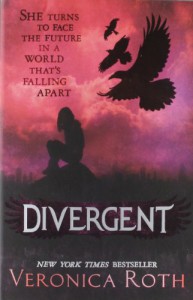
Divergent

Divergent  - Veronica Roth We believe in ordinary acts of bravery, in the courage that drives one person to stand up for another.

I first came across Divergent last year (what can I say? I’m always late to the party!) when I heard about the film of it. To tell the truth, it sounded awfully like one of those books which has spawned as a result of The Hunger Games. Now, as I’ve mentioned before, The Hunger Games really wasn’t my bag. I found Katniss incredibly obnoxious at the time and I generally found it pretty predictable. However, I think I brought a lot of prejudice in terms of my expectations of literature and particularly young adult literature at that time. To that end, I’m definitely going to give it another go at some point this year.

But this isn’t about the Hunger Games, this is about Divergent.

I absolutely adored it.

To me, this book is the ultimate “suspend your disbelief” book. No, the world-building doesn’t make a lick of sense. It’s not a 1984 kind of dystopian, in the sense that you can pinpoint areas of that society which are relevant and even comparable to ours. Divergent is the sort of book where you either accept the initial premise for what it is, or you don’t. If you can’t, then you’re probably not going to enjoy the book. That’s not a criticism. There are things, such as The Hunger Games, for which have not been able to suspend my disbelief, but many others have. However, Divergent just grabbed me. It was exactly what I needed to start my year off with: easy to read, well-paced, and just plain fun.

What really sold me on it was Tris. I really loved her. One of the great things about her characterisation is that she finds self-belief pretty rapidly over the course of the novel. Even right at the start, when she’s chosing her faction, she makes a decision based on her own inner compass and for no reason other than that. Too often, female protagonists in young adult novels suffer from either a lack of self-esteem (cf. Cath in Fangirl, which I disliked) or are pigeonholed into the strong action-girl emotionless role (which was my original problem with Katniss, though as I said, it will take a reread to discover whether I still feel the same way). To my mind, Tris is much more well rounded than this. I love that she has obviously negative traits - the impulsiveness that gives way to losing her temper, the cruelty that this engenders - and I love that she has strength in abundance, not just physically but mentally. She makes mistakes, but is pretty accepting of the fact that mistakes happen, and they can be forgiven, both by herself and others. At the same time, she has the tenacity not to forgive what should not be forgiven. She shows her strength to Four, but also allows herself to be vulnerable with him. She tells Four she isn’t pretty, but realises that whether she is or isn’t pretty isn’t the be all and end all of who she is anyway. And she never feels like she should have to apologise for what she is - Divergent - even though she has to hide it for her own safety.

That’s not to say I didn’t have any feelings for the supporting characters either. Four is a pretty decent character. I’d like to see more of what he’s like away from the construct of the Dauntless faction. I sometimes found it a little hard to get a sense of him as a fully realised person but I guess that reflects Tris’s perceptions of him as well. Christina is fantastic - again, she’s another female character who is entirely herself. And Al - the changes in his character were something I could have not predicted. Roth did a very good job of making you feel conflicted over his part in proceedings. If I had one criticism of the characterisation it’s that some of the villains - Eric, Janine, and Marcus in particular - are a bit one-dimensional. Obviously it’s hard to say at this stage whether that will continue to be the case.

Otherwise, the plot was a touch predictable, but I wasn’t really too bothered by that. The breakneck pacing was so good that any of the more straightforward plot points were easily overlooked. Like I said, the world-building is something that will probably be a problem for some people. If you think too hard about the Factions and how this came about and how this world lasted - the whole thing comes a bit unstuck. However, if you can accept that these are the rules and this is how this world is - then it’s a pretty exciting read. It helped me to think of it as a world completely divorced from our Earth, if that helps anyone else at all.

None of these little niggles managed to overcome my enjoyment of this story though. Rarely have I read something that was so unabashedly fun as this. I give Divergent nine out of ten.

Harry Potter and the Philosopher's Stone

Harry Potter and the Philosopher's Stone  - J.K. Rowling I "reread" this over the last week or so by listening to the Stephen Fry audiobook. It's fantastic. I seriously recommend it for anyone who's read the books before but would like a slightly different experience. I'll certainly be listening to the other ones! Also, this is book 100. I achieved my challenge!

***
Harry Potter tends to be one of those things that either works for you or it doesn't. I was just about the right age when the books came out (I must have been around eight-ish when I read the first two and it continued from there) and I always felt that contributed to my affection for the series; I was almost seventeen when the final book was released and just in that same period of almot-adulthood that the protagonist was enduring at the same time.

I've read (and reread) all of the books several times. This first is a reasonably simple adventure story right until the end, and I can't fault it for that. There are hints of things to come in the future - nothing is more prescient, nor creepy, than the suggestion that Dumbledore set it all up so that Harry and Voldemort would face each other - but nothing too heavy. Although, in saying that, retrospectively the Mirror of Erised scene is a bit fucked up. I'm not sure I would like to be confronted with my heart's deepest desire like that, though I suppose that's sort of the point.

These books were responsible for a lot of my formative reading development, and for that I can't fault them, but I appreciate that this is one of the less fully-formed installments.

Everything Is Illuminated

Everything Is Illuminated - Jonathan Safran Foer Ugh, no. The writing was juvenile (I mean, I know he was younger than I am now when he wrote this, but COME ON). I am severely turned off by body function humour - I just don't like it. The descriptions of Brod were creepy to me, beyond feeling like they were being imputed to the members of the village - I don't know why certain male authors feel the need to have young female characters who are depicted in this way in their books, but, like in The Windup Girl, this is a total turn-off for me and is what ultimately led to me putting the book down. There is literally nothing I could recommend about this. The idea was terrible, the prose was terrible, the characterisation was lukewarm to good, depending on the scene. I just don't care enough to continue.

Fangirl

Fangirl - Rainbow Rowell God, Cath is the worst.
Reblogged from Archer's Asylum:

Intro-type Post

I’m a twenty-three-year old Law graduate from Glasgow.  My main hobby is being exceptionally interested in everything, as long as it doesn’t involve too much effort. I have a book-buying (and reading!) obsession which does not improve my studying habits or bank balance in anyway. Other interests include making lists, music, my pet rats, watching DVDs (of varying quality, and only intermittently owing to possessing a live-in boyfriend whose lack of dedication to the televisual medium is somewhat trying), and generally being a lazy article.  I may exercise occasionally and I should probably take more photos. Oh, I also suffer from moderate anxiety about almost everything that has ever happened to me, but I’m trying to work on that one. But all in good time.  I have hypermobility that occasionally makes it hard to type/blog so that kinda sucks. I'm a generally pretty chill person, though I have my moments! 


Stuff I like:

Books: Terry Pratchett, Jostein Gaarder, Malazan: Book of the Fallen, Jane Austen, China Mieville.

TV: Buffy the Vampire Slayer, Adventure Time, The Wire, Black Books, Father Ted.

Films: Little Miss Sunshine, Amelie, Dollars Trilogy, Lord of the Rings, Beauty and the Beast.

Music: Franz Ferdinand, Leonard Cohen, The National, Bruce Springsteen, Tegan & Sara.

I totally did not just do those off the top of my head.

Otherwise, ask me! I'm really open to any messages (even though sometimes I forget to respond because I'm a numb nut but please don't take it personally!), followers, whatever.  I love meeting new internet people and stuff.

Currently reading

The Tough Guide to Fantasyland
Diana Wynne Jones